
Waterwise Landscaping

Drip irrigation
Drip irrigation is the technique of applying small amounts of water directly to the soil surface over extended periods. Drip irrigation applies a precise amount of water to the area of the roots, versus sprinkler or flood irrigation, which covers large areas of the soil where roots may not be. Drip irrigation helps minimize evaporation by applying water directly to the soil. Overhead irrigation can lose significant amounts of water through wind, which carries it away, and evaporation before the water reaches the soil.

Rachio smart timers
Rachio timers are the only timers we install. The Rachio is programmed for your yard site parameters. Parameters include the plant type (lawn, shrubs, trees, or vegetables) and your site conditions (soil type, sun exposure, slope, and irrigation type). The Rachio connects to the Internet and adjusts each station's run times and watering frequency based on local weather data and your yard's parameters.

Flow meters are calibrated to each zone in your landscape. You receive a notification on your mobile device if there is a high flow from a break or a low flow from a pinched line detected. This allows you to make repairs proactively.

Rachio typically uses weather data from multiple local weather stations in your area to make adjustments. Installing a weather station in your yard provides the exact weather data that the Rachio uses to adjust irrigation run times and frequency.
How much water and time can you save by removing your lawn and xeriscaping?
Here is the same yard, designed two different ways. The first has lawn only, and the second is a xeriscaped yard. The math for total gallons assumes both yards are fully established (at least three years old). A newly landscaped yard will require significantly more water to keep the roots moist while they establish.

A grass-only yard
A grass-only yard requires about 50,050 gallons for seven months of watering. This is based on seven months of watering the lawn, receiving about 2” of water each week, and a 70% efficiency, which is average for a sprinkler system.
A healthy lawn of around 1,000 square feet will take about 20 minutes to mow, resulting in about 9.5 hours of your summer spent walking in circles.
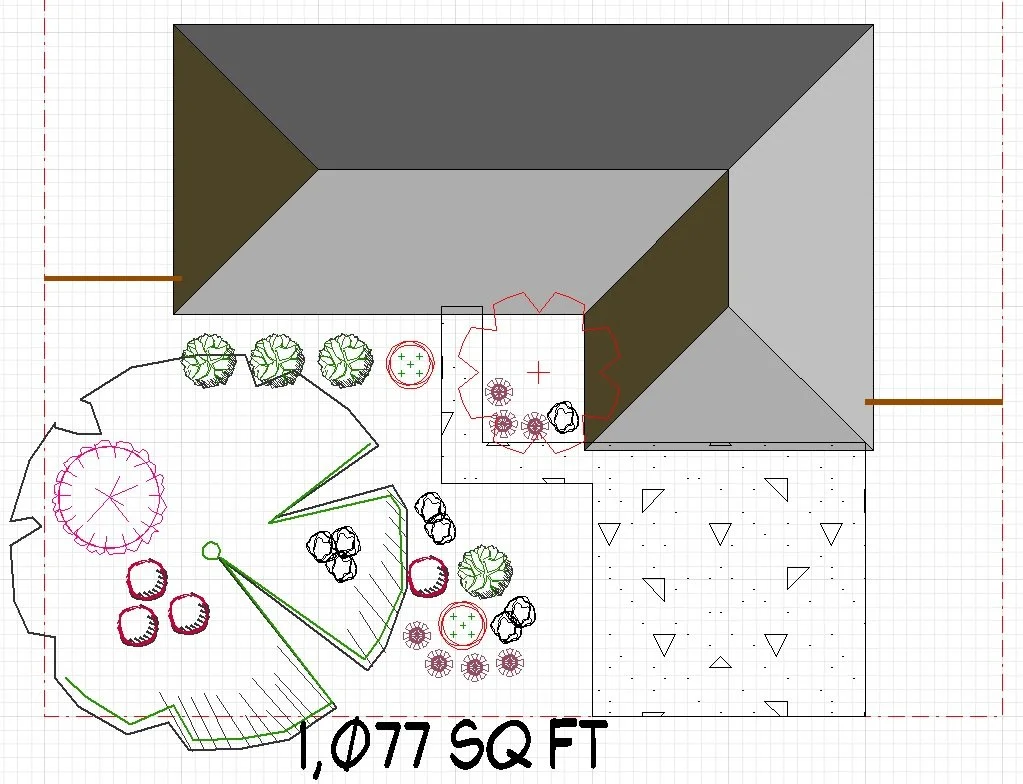
Xeriscape Yard
This version of the yard has two trees, ten shrubs, seven perennials, and some boulders. Using the same seven months of watering, running the drip irrigation for two hours, two times per week, will use about 50 gallons per week or 1,400 gallons per seven months of watering. More plants in the yard will increase the amount of water used.
Maintaining this yard requires weekly walkthroughs to check on the plants’ health or pull weeds. Four times per year, you will spend about an hour pruning, fertilizing, and removing leaf litter from the yard.
Environmental Differences
The xeriscaped yard will have significantly less pollution than the lawn yard because there is no lawn mower.
The xeriscaped yard can provide habitat for birds, beneficial insects, lizards (Yay!), and pollinators. The lawn-only can provide habitat if it isn’t mowed. Otherwise, frequent mowing can kill many frogs and other small creatures.
The xeriscaped yard can provide food for wildlife through berries, fruits, nectar, and pollen sources. The lawn-only yard can provide food and pollen through dandelions and clover, if they aren’t treated with herbicides.